

A mini bike is one of the most fun ways for a young rider to get outside, build confidence, and learn how to ride off-road. But before that first throttle twist, every family needs to understand the mini bike safety rules that keep the fun from turning into a trip to the emergency room. Mini bikes are not toys——they are small motorcycles that can reach real speed. When you treat them with the same respect as a full-size machine and follow a few non-negotiable rules, riding becomes safe, legal, and genuinely enjoyable. Below is a complete guide to mini bike riding safety, from the gear you wear to the ground you ride on.
Wear Proper Mini Bike Safety Gear
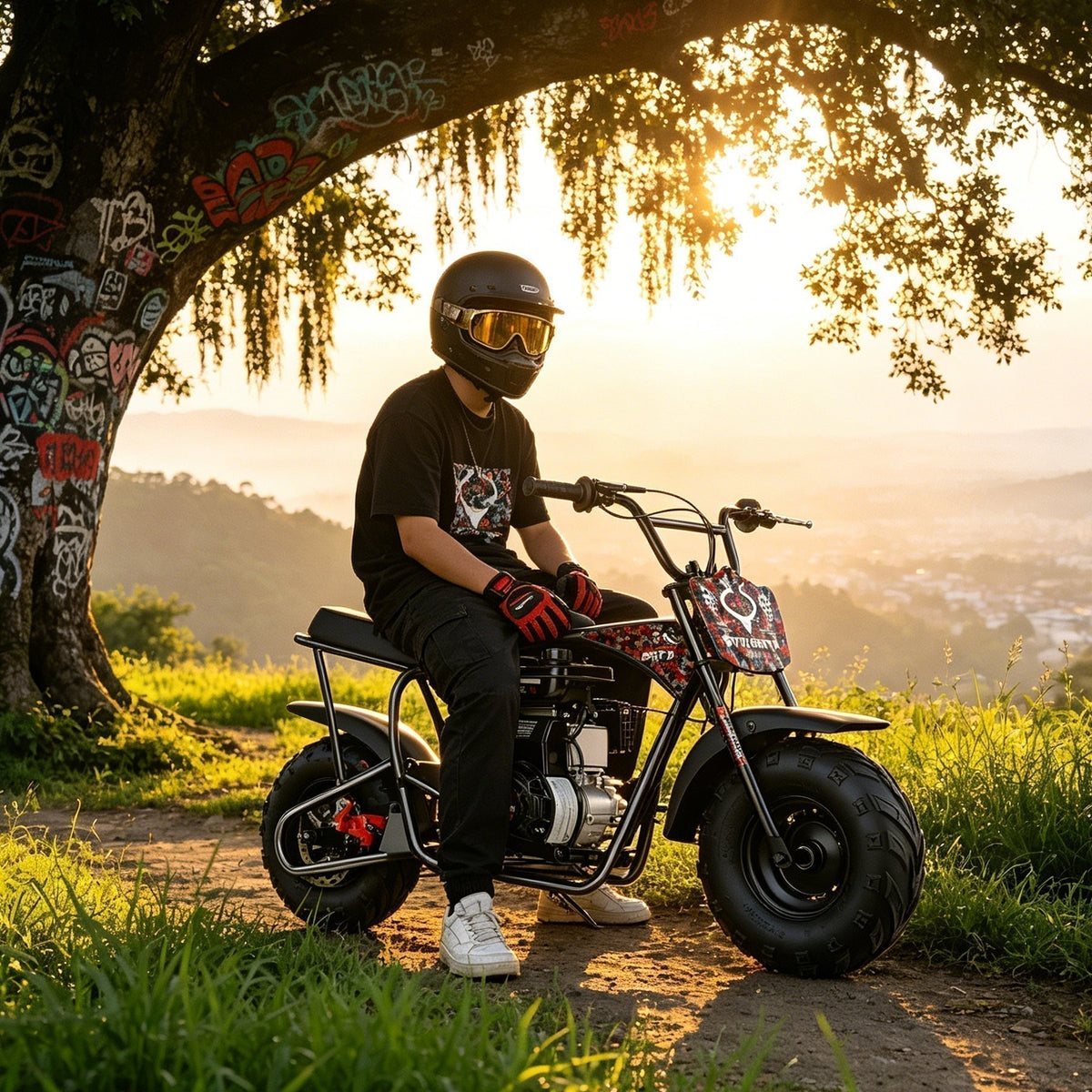
The single most important safety rule for any young rider is wearing the right protective gear every single time——no exceptions, no "just a quick ride." Most serious mini bike injuries happen not because of the bike, but because the rider skipped their safety equipment. Here is the minimum kit every rider should wear:
A certified helmet. This is the most important piece of gear. Choose a DOT-approved off-road helmet that fits snugly. A properly fitted helmet protects against head injuries, which are the most serious and most preventable.
Goggles or a face shield. Dust, dirt, stones, and bugs get kicked up fast at speed. Eye protection keeps your vision clear and keeps debris out of your eyes.
Long sleeves and long pants. Durable clothing protects your arms and legs from scratches, brush, and the occasional spill. Avoid shorts and tank tops on a mini bike, no matter how hot it is.
Gloves. Full-finger gloves improve grip on the handlebars and protect your hands if you fall.
Boots. Sturdy boots that cover the ankles are far safer than sneakers. They protect your feet and ankles from the chain, the pegs, and impacts.
Knee and elbow pads. For newer riders especially, pads add a valuable layer of protection where you are most likely to hit the ground.
Fit matters as much as wearing the gear. A helmet that is too loose or a strap left undone provides almost no protection. Check that everything is snug, secure, and in good condition before the bike even starts.

Follow Essential Mini Bike Riding Safety Rules
Gear protects you, but safe riding habits are what actually prevent crashes. Teach your kids these core mini bike riding safety rules and make them automatic:
Learn the controls first. Before riding, know exactly where the throttle, brakes, and kill switch are, and practice using them at a walking pace. Knowing how to stop is the first skill to master.
Start slow and build up. No young rider should hit full throttle on their first ride. Spend the first sessions at low speed in an open, flat area until braking, turning, and balance feel natural.
Use both brakes. Relying on just the rear brake makes stopping slower and less stable. Practice using front and rear brakes together for controlled, predictable stops.
Always keep two hands on the bars and both feet on the pegs. It sounds obvious, but it prevents most beginner spills.
Never ride alone. It is far safer for a young rider to ride with a parent or another responsible adult nearby. If something goes wrong, help is right there.
Ride within your ability. If a hill, jump, or turn feels too much, slow down. Confidence grows with time — pushing past your skill level is how crashes happen.
Never ride after dark or in bad weather. Low visibility and wet, slippery ground are dangerous, even for experienced riders.
A good rule of thumb: if you would not let a young rider ride a full-size motorcycle in a certain way, do not let them ride a mini bike that way either.
Choose Safe and Legal Riding Areas
Where your young rider rides is just as important as how. Many parents ask, "where can I ride a mini bike?" and the answer shapes both safety and legality. Mini bikes are designed for off-road use, not public streets.
Best options: your own private property, a farm or backyard with plenty of open space, and dedicated off-road or trail riding areas designed for this kind of recreation.
What to avoid: public roads, sidewalks, bike lanes, and streets. In most areas, mini bikes are not street legal, and riding them on roads is both dangerous and against the law. This is one of the most common mistakes new owners make.
Check local rules. Laws vary by state and county. Some areas require riders to be a certain age, and some require a license or permit even for off-road use. Before your young rider rides anywhere, look up the regulations for your exact location — including whether a mini bike license is needed in your state.
Ask permission. If you plan to ride on private land that is not yours, always get the owner's explicit permission first.
Choosing a safe, legal spot keeps the ride fun and keeps you on the right side of the law.

Inspect Your Mini Bike Before Every Ride
A quick check before riding catches small problems before they become dangerous ones. Inspecting your mini bike takes just a few minutes and should become a routine part of every ride:
Tires: check air pressure and look for cracks, cuts, or excessive wear.
Brakes: squeeze both levers and confirm the bike stops smoothly and firmly.
Chain: make sure it is properly tensioned, lubricated, and free of damage or debris.
Throttle and cables: check that the throttle returns smoothly to idle when released and that cables are not frayed.
Fuel and oil: confirm fuel levels and check the oil, especially for a four-stroke engine like a 105cc mini bike, which needs proper oil for reliable, safe operation.
Bolts and fasteners: give the bike a quick once-over to make sure nothing is loose, especially around the handlebars, wheels, and frame.
Kill switch: test it so you know the engine can be shut off instantly in an emergency.
If anything seems off, do not ride. Fix the issue or have it serviced first. A few minutes of inspection now beats a breakdown — or worse — in the middle of a ride.
FAQs
What age is appropriate for a teen to ride a mini bike?
Most mini bikes, including 105cc models, are designed for riders roughly 13 and up, and many are built to support both teens and adults. The more important factor than age is size, maturity, and experience. A rider should be able to reach the ground comfortably, handle the controls, and follow safety rules reliably. Always check the manufacturer's recommended weight and age range, and always supervise newer riders.
How fast should a young rider ride a mini bike?
A young rider should ride at whatever speed they can control safely and predictably — typically that means starting at a walking or jogging pace and only increasing speed as their braking, balance, and confidence improve. Many 105cc mini bikes are capable of speeds around 24-28 mph, but top speed is not the goal. The right speed is the one the rider is fully in control of at all times.
What happens if young riders skip wearing full protective gear?
Skipping gear dramatically increases the risk of serious injury. Without a helmet, a fall can cause a head injury; without gloves, boots, and pads, even a minor spill can mean cuts, scrapes, and sprains. Riders who skip gear also tend to ride more carelessly. In short, the consequences range from painful injuries to permanent harm-none of which are worth a few minutes of discomfort.
Related
Mini Bike for Kids: Where Young Riders Begin Their Epic Journey
Exploring the World of Mini Bikes
Conclusion
Mini bikes are a fantastic way for young riders to get outdoors, learn a real skill, and have a great time — but only when safety comes first. Wear the right gear, follow the core riding rules, choose a safe and legal place to ride, and inspect the bike before every session. Do these things consistently, and mini bike riding becomes something the whole family can enjoy with confidence. Mini bike safety is not complicated; it is just a set of good habits that keep every ride fun and every rider safe.

コメントを書く
全てのコメントは、掲載前にモデレートされます
このサイトはhCaptchaによって保護されており、hCaptchaプライバシーポリシーおよび利用規約が適用されます。