
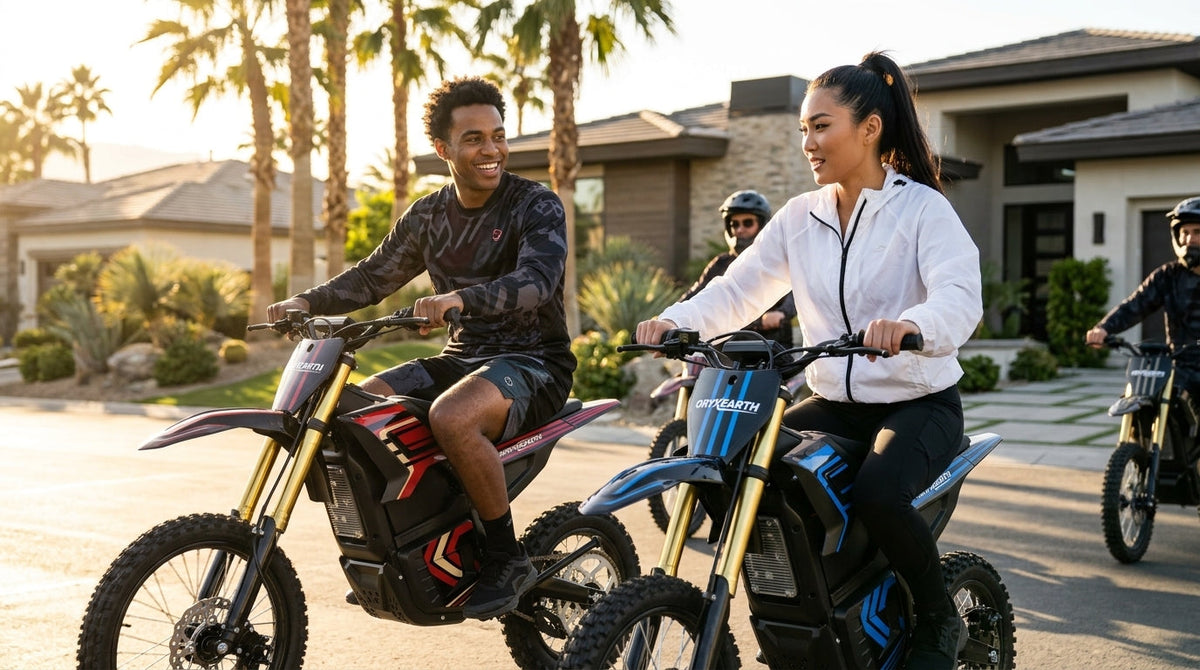
Modern electric dirt bikes are no longer just toy-grade units. Today's recreational off-road models combine advanced motors, rugged frames and functional batteries to deliver reliable, exciting rides for teen and adult trail riders. Top speed alone does not define off-road performance. Real-world capability depends on balanced hardware that governs handling, durability and usability on rough terrain. Knowing these key metrics helps buyers cut through marketing hype and assess actual performance before purchasing.
Motor Output and Real-World Off-Road Power
Motor performance defines how an electric dirt bike responds on trails, hills and loose ground, yet many shoppers only focus on peak power numbers listed in product descriptions. Rated continuous power and peak power serve very different purposes. Continuous power reflects consistent output for sustained trail riding, while peak power delivers short-burst acceleration for climbing steep slopes or pulling through rutted sections. Unlike gas-powered dirt bikes that need to build engine RPM to generate torque, brushless electric motors deliver strong torque instantly from zero throttle input. This characteristic makes modern electric dirt bikes exceptionally forgiving for new riders, while still offering enough punch for more experienced off-road users.
Programmable power modes represent another key modern motor feature. Multi-mode controllers allow riders to dial back output for learning sessions or unlock full performance as skills improve. Adjustable modes help match power output to rider skill and trail difficulty, removing the intimidation of uncontrolled bursts of speed for less-confident operators. When comparing motor performance, riders should look beyond peak wattage. Smooth throttle response prevents sudden wheel spin on mud or gravel, a detail that heavily impacts safety on technical trails. A high peak-watt rating will mean very little if throttle delivery feels jerky or inconsistent across low-speed trail sections.
Battery Specifications and Practical Riding Range
Motor performance defines how an electric dirt bike responds on trails, hills and loose ground, yet many shoppers only focus on peak power numbers listed in product descriptions. Rated continuous power and peak power serve very different purposes. Continuous power reflects consistent output for sustained trail riding, while peak power delivers short-burst acceleration for climbing steep slopes or pulling through rutted sections. Unlike gas-powered dirt bikes that need to build engine RPM to generate torque, brushless electric motors deliver strong torque instantly from zero throttle input. This characteristic makes modern electric dirt bikes exceptionally forgiving for new riders, while still offering enough punch for more experienced off-road users.

Programmable power modes represent another key modern motor feature. Multi-mode controllers allow riders to dial back output for learning sessions or unlock full performance as skills improve. Adjustable modes help match power output to rider skill and trail difficulty, removing the intimidation of uncontrolled bursts of speed for less-confident operators. When comparing motor performance, riders should look beyond peak wattage. Smooth throttle response prevents sudden wheel spin on mud or gravel, a detail that heavily impacts safety on technical trails. A high peak-watt rating will mean very little if throttle delivery feels jerky or inconsistent across low-speed trail sections.
Suspension and Frame Design for Rough Terrain
Even powerful motor and battery setups cannot deliver satisfying off-road performance without capable suspension paired with a well-engineered frame. Frame geometry determines rider posture, weight distribution and overall bike stability when hitting bumps, crossing ruts or navigating uneven trails. Modern recreational electric dirt bikes strike a balance between rigidity and reasonable overall weight. Too much weight makes the machine tiring to maneuver over long trail days, while overly lightweight frames risk durability damage under repeated off-road impacts.
Full-suspension configurations, including heavy-duty inverted front forks and responsive rear shock absorbers, absorb trail shocks to keep tires in contact with ground. Maintaining consistent tire grip matters far more for rider control than raw speed. Budget-oriented machines may rely on stiff basic springs, while higher-quality recreational platforms use hydraulic damping to smooth out small bumps and resist bottom-out on harder landings. Frame material choices influence both durability and handling feel. Thoughtful frame layout also positions heavy battery components low within the chassis to lower the center of gravity. Lower center-gravity improves cornering stability and reduces the risk of tipping on uneven ground. For example, our electric dirt bike series frames are built to support up to 265-pound load capacity while keeping weight distribution optimized for teen and adult recreational off-road use.
Braking Systems Designed for Unpaved Trails
Reliable stopping power stands as one of the most critical yet frequently overlooked performance traits of modern electric dirt bikes. On loose dirt, mud, gravel and steep downhill sections, weak brakes create obvious safety risks. Hydraulic disc brake systems have become standard on modern-spec recreational electric dirt bikes, outperforming older mechanical disc brakes in wet, muddy trail conditions. Hydraulic setups deliver firm, consistent stopping force with comparatively light lever input, reducing hand fatigue during long trail rides.
Front-rear brake balance is another key detail. Quality electric dirt bikes match front-disc and rear-disc sizes to distribute stopping force appropriately. Front brakes handle most stopping workload, while rear brakes provide modulation for cornering and slippery-surface control. When riding downhill over rough terrain, riders repeatedly apply brakes, and systems must maintain performance without fading from heat buildup. Entry-level machines may cut corners with low-grade brake calipers and thin rotors. For serious off-road use, look for full dual-hydraulic disc brake hardware. Riders should remember that brake performance also depends on regular basic maintenance; pad wear accelerates quickly in dusty off-road environments.

Weight Profile and Its Impact on Ride Handling
Total bike weight and weight distribution shape nearly every element of trail handling. An electric dirt bike with strong motor and battery specifications can feel unpleasant and difficult to control if overall weight sits too high or total mass becomes excessive. Heavier machines require more physical effort to maneuver around tight singletrack trails, pick up after falls, or load onto transport vehicles. At the same time, overly light builds can sacrifice frame strength and chassis stability under heavy-use off-road conditions.
Weight distribution counts just as much as total poundage. Modern electric dirt bike designers place heavy components such as motor and battery low and central within the frame. This layout lowers center of gravity and helps the bike stay planted through corners and over uneven ground. A bike with heavy weight concentrated high up will feel tippy, even if its total weight number looks appealing on paper.
Target rider size also connects closely to weight performance. Machines built for teens and adults need enough structural strength for higher load capacities without becoming bulky. Our electric dirt bike series balances durable construction with practical weight for riders 14 years old and above, making these models suitable for both newer off-road participants and more experienced recreational trail riders. When you test or research an electric dirt bike, consider not just static weight numbers, but how that weight feels when maneuvering at low speed, because low-speed handling defines much of real-world off-road trail experience.
FAQs
Does higher motor wattage always equal better trail performance?
Not necessarily. Peak wattage only reflects short-term burst power. Continuous power output, throttle smoothness and power mode tuning matter more for consistent trail performance. A well-tuned mid-range motor can deliver more controllable off-road experience than a unit with inflated peak-power figures.
What suspension features matter most for recreational trail electric dirt bikes?
Look for heavy-duty inverted front forks and shock absorbers with proper damping. Good suspension keeps tires in contact with uneven ground, absorbs impact and prevents bottom-out on hard landings, which greatly improves handling and rider comfort on unpaved trails.
How does bike weight influence the off-road handling of an electric dirt bike?
Total weight and weight distribution both play big roles. Heavy bikes are harder to maneuver on tight trails. Heavy components such as batteries and motors mounted low in the frame lower the center of gravity, boosting stability even if the overall weight is not super light.
Related
Two Great Electric Bikes Worth Buying Under $1,500
Conclusion
Modern electric dirt bike performance is more than top speed or peak power. Real trail capability depends on motor, battery, suspension, brakes and weight working as one system. Quality recreational models feature instant torque, adjustable power, solid lithium-ion batteries, off-road suspension, reliable hydraulics and balanced weight. For teen and adult riders, checking these core traits cuts marketing noise to find trail-ready bikes. Well-balanced engineering delivers great private-land recreation performance. Focus on these points to pick a bike matching your skill and riding goals.

Leave a comment
This site is protected by hCaptcha and the hCaptcha Privacy Policy and Terms of Service apply.